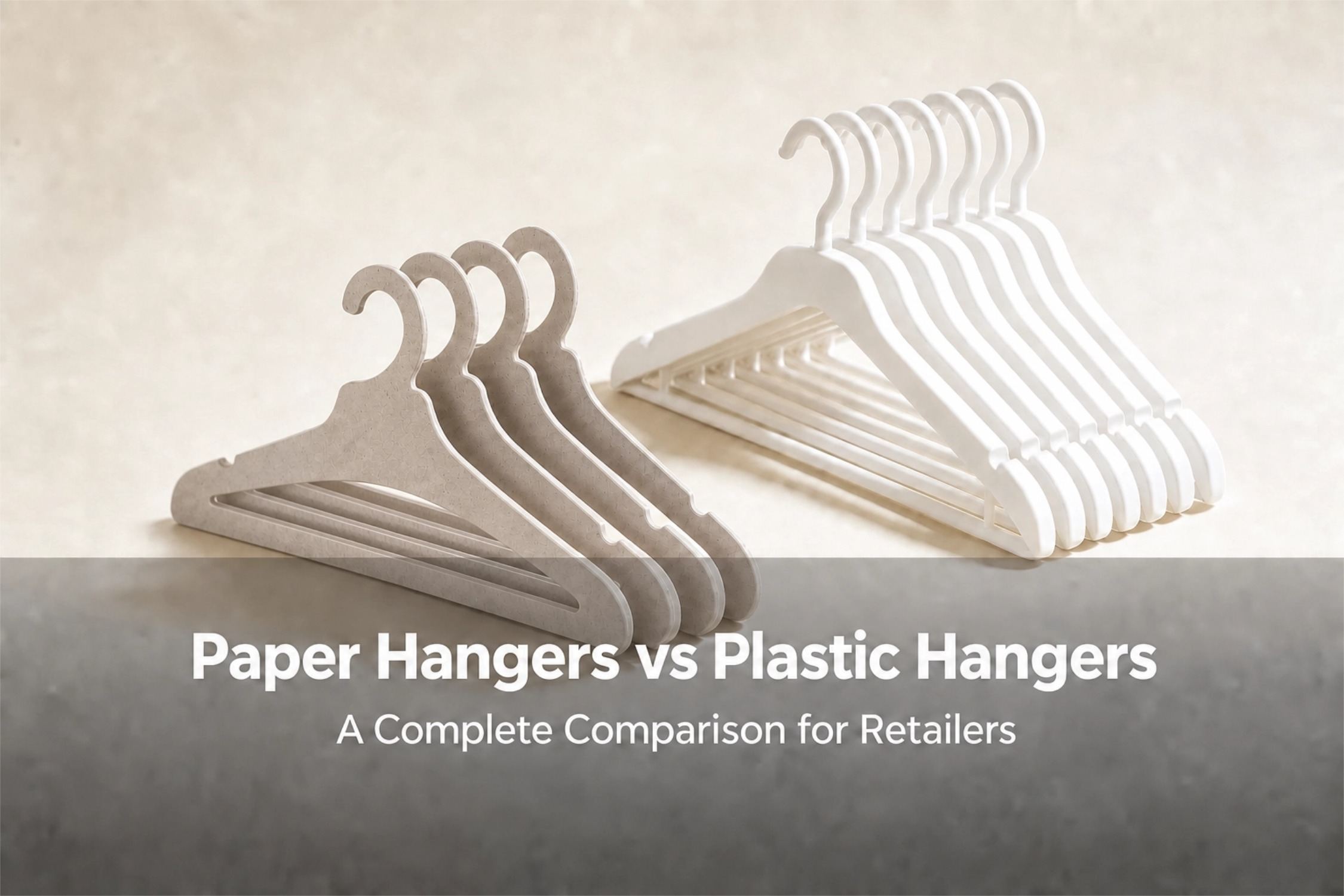
Paper Hangers vs Plastic Hangers: A Complete Comparison for Retailers
Sep, 07 2026
The environmental impact of plastic
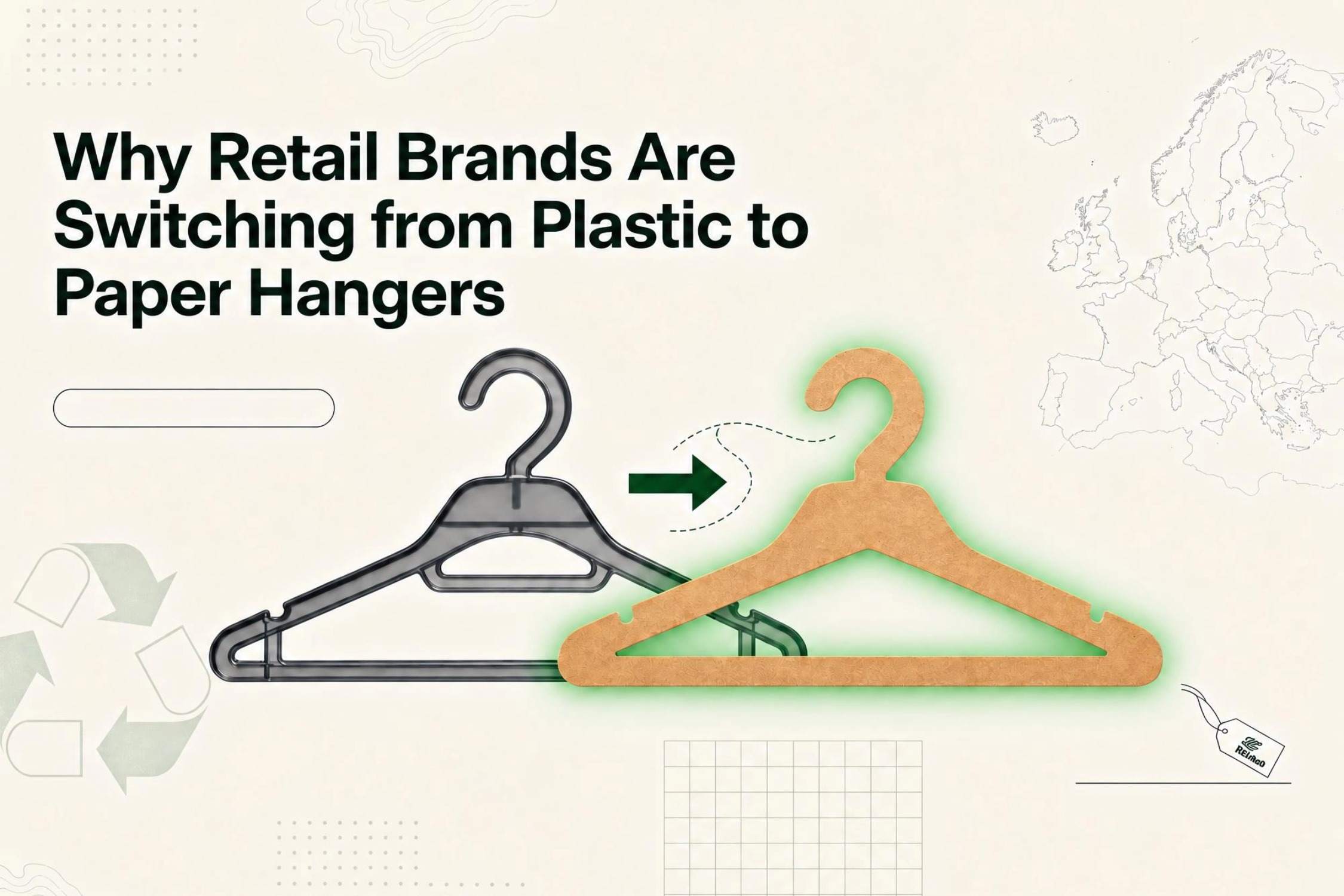
Plastic hangers became the retail standard because they are cheap to mass-produce and easy to source in large volumes. That convenience, however, comes with a long-term problem: most plastic hangers are used once and then discarded, and because they are made from mixed polymer materials, they rarely enter mainstream recycling streams. Globally, millions of plastic hangers move through retail stores every season, but only a small fraction are ever recovered or reused. The result is a continuous flow of single-use plastic leaving the retail sector, with limited end-of-life value.
Paper hangers offer a different model. Runhee manufactures hangers from recycled paperboard — the same material used across our paper hangers, paper hooks, and display products. We use compressed, multi-layer recycled board, which is strong enough for everyday retail handling while remaining fully recyclable. Because the material is renewable, widely recyclable, and single-material in design, it gives retailers a cleaner end-of-life story. Store teams do not need to separate plastic parts, remove metal hooks, or arrange specialist collection. The hanger can simply follow standard paper and cardboard recycling routes.
This is not only a material change. It is a shift in how retail display products are planned, used, and disposed of. Every Runhee hanger is developed by garment type and tested before release, which means the product is not just a sustainable alternative — it is also built to perform under real store conditions. For brands under increasing pressure to reduce plastic across the entire store environment, paper hangers provide a practical replacement that works within existing recycling systems rather than against them.
Strength: The true performance of engineered board
The issue that retail teams are most concerned about is durability. Paper is often perceived as fragile, but this impression stems from lightweight packaging board rather than engineered board. Our hangers are made from compressed, multi-layered recycled cardboard, giving them the rigidity and structural stability required for day-to-day retail operations. Different types of clothing require different structures: hangers for children’s clothing, bras and trousers have all been developed independently, with variations in cardboard grammage, shoulder angles and end details. Each design undergoes internal testing before being launched onto the market. For knitwear, shirts, scarves, children’s clothing and socks, a well-designed paper hanger can fulfil its purpose without compromise.
Cost: Unit Price vs Long-Term Value
When viewed solely in terms of unit price, plastic may still appear to be the cheaper option. However, more retailers now look beyond the purchase price and evaluate hangtag solutions across total cost, including disposal, regulatory risk, and brand positioning. This is where paper hangtags begin to close the gap. Because Runhee produces hangtags from recycled paperboard using die-cutting rather than injection moulding, custom shapes do not carry the high upfront tooling cost that plastic alternatives require. The difference is especially clear for brands that change designs frequently or want dedicated structures for different garment categories.
There is also a logistics advantage. Paper hangtags are flat-packed and lightweight, which reduces carton volume and lowers freight cost per unit. In large-scale retail programs, where hangtags are ordered in large quantities across multiple regions, this saving becomes significant. At the same time, paper hangtags offer the same practical function as plastic versions — they carry branding, size, and product information while remaining easy to handle at store level.
From a regulatory perspective, the movement is already underway. In several European markets, where restrictions on single-use plastic continue to tighten, paper hangtags are shifting from a premium alternative to the standard specification. For brands planning long-term retail programs, this means paper is no longer only an environmental statement. It is becoming the safer, more consistent choice for supply chain planning and compliance.
Presentation: A More Considered Retail Experience
Paper hangers also support a more intentional store presentation. A well-finished paperboard hanger can carry a brand's logo, color, and graphic identity in a way that reinforces the wider retail environment. Plastic hangers are functional but visually neutral. For brands that invest in store experience and customer perception, printed paper hangers become a small but effective part of the brand story. This is one reason paper hangers are increasingly specified not only as a plastic replacement, but as a branding surface in their own right.
The Market Is Already Moving
The direction of the industry is clear. Retail groups are steadily adopting paper as the base material for lightweight apparel presentation, and plastic restrictions continue to expand across key markets. Runhee alone has supplied more than 1.2 billion paper hangers to brands and retailers worldwide — a sign that paper hangers are already operating at commercial scale, not as a niche trial. For brands still running plastic hanger programs, the question is no longer whether paper can perform — it is how quickly the transition can be made with confidence. The brands that move early will have more control over design, cost, and supply.